The Perils of Appointing a “Lemon” Strata Manager

The recent spotlight on “lemon” car sales in Victoria, where a significant percentage of buyers reported purchasing vehicles with major faults, serves as a stark reminder of the broader consumer risks associated with poor-performing services.
While the ABC News report focused on cars, the parallels for strata communities are striking. Just as a faulty car can drain an owner’s finances and peace of mind, a deficient strata management company can place a heavy strain on communities.
Key Takeaways:
- Poor strata managers can cause financial mismanagement, legal issues, and falling property values.
- Red flags include unclear fees, poor reviews, lack of experience, weak communication, and no complaint process.
- Committees can protect themselves through due diligence, clear contracts, active oversight, and knowing their legal rights.
The consequences of a faulty strata manager
A good strata manager helps a community thrive, but a poor one holds it back. Instead of offering stability and guidance, they cause problems such as:
- Financial mismanagement: Incorrectly levied fees, delayed invoice payments, weak budget control, or a lack of transparency with community funds.
- Neglected maintenance: Overdue repairs, ignored common property issues, and a decline in building condition that leads to safety risks and reduced property values.
- Poor communication: A lack of responsiveness to owner enquiries, failure to share important information, or a breakdown in communication channels that fosters frustration and disputes within the community.
- Legal and compliance issues: Failing to comply with the Owners Corporations Act 2006 (Victoria) or other relevant regulations. This can expose the owners corporation to penalties and costly legal battles.
- Lack of transparency: Opaque decision-making processes, unclear reporting, or difficulty accessing records that undermines trust and makes it challenging for owners to understand how their money is being used.
Because of these risks, committees cannot be complacent when selecting a new strata manager. Recognising the warning signs early is the best way to avoid future setbacks.
Red flags to watch for when choosing a strata manager
Below is a table showing some red flags to help committees identify if a strata manager might be a potential “lemon”:
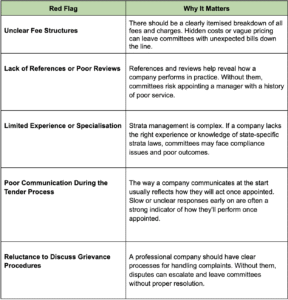
If you notice these warning signs, it’s best for the committee to pause before moving ahead. A manager who starts off this way is unlikely to improve, so it’s smarter to be cautious early on.
How Committees can protect their Owners Corporation
Even after you appoint a strata manager, the Committee still needs to stay vigilant. Protecting the community means putting the right measures in place. Here are some of the most important ones:
Do thorough due diligence
Before appointing any company, conduct comprehensive background checks. Verify their credentials, insurance, and professional affiliations.
Set detailed contracts
Make sure the management agreement is comprehensive and clearly outlines the scope of:
- services, fees
- performance expectations
- termination clauses
Seek legal advice if necessary.
Keep active oversight
The Owners Corporation Committee should actively monitor the strata manager’s performance, regularly review financial reports, and maintain open lines of communication.
Know your rights
Familiarise yourselves with the strata laws that apply in your state, such as the Body Corporate and Community Management Act 1997 (Queensland) or the Strata Schemes Management Act 2015 (New South Wales), along with protections available under consumer law.
Seek recourse when needed
If a strata manager is underperforming, the Owners Corporation has avenues for recourse, including formal complaints, dispute resolution processes, and, as a last resort, take the matter to VCAT.
Accountability in Strata Management
Just as consumer advocates call for stronger penalties against companies selling faulty products, there is also a need for greater accountability and transparency in the strata management sector.
By exercising caution and maintaining active oversight, Committees across Australia can reduce the risk of appointing a “lemon” and ensure their shared investments are managed effectively and professionally.
Where to find trusted strata management companies
With so many strata management companies presenting a polished façade, it can be hard to know which ones are genuinely reliable. Too often, Committees only realise the shortcomings once the service has already begun.
Isn’t there a way to know at the start?
There is. StrataQuote is an online platform that connects committees with vetted, professional strata managers, making it easier to find a partner who will genuinely support their community.
FAQs about appointing a strata manager
The best time is usually when the current contract is due for renewal, but a change can also be made sooner if the community is not satisfied with the service.
Committees should ask about experience, services included in the fee, communication practices, handling of disputes, and compliance with strata laws.
Comparing multiple managers helps committees identify fair pricing, better service offerings, and managers who are the right fit for the community.
The contents of this article or website are only intended to provide a general overview of the topics discussed. The author of this article makes no representations as to the accuracy or completeness of any information and the information is not intended to constitute investment, legal or professional advice. You should seek professional advice before acting or relying on any of the content. This article does not contain references to any specific company, organisation or individual, unless expressly specified.